Creative Living is Extraordinary

This was a refreshing and encouraging read. 

Quick Synopsis: Elizabeth Gilbert talks about the importance of creative living. The importance of chasing curiosity, not wallowing in failure, and recognizing that creative living is the only way to live. 

The most interesting part of this book was when Gilbert talked about her idea to write a book about the Amazon jungle. The idea just came to her and she was ecstatic and completely imbibed in the process of writing that book. However, unexpected events in her life came in the way and hindered the completion of that book. Years later, Gilbert meets one of her author friends, who shares a book idea that she got. The friend repeats the same plot and idea that Gilbert had had with her Amazon jungle story. HOW INSANE! 

We often think that ideas are our own. After reading this book, I realize that ideas do not belong to us – we do not create them. Ideas are alive entities and they find that one right person who will bring them to life. 

That’s exactly what happened with Gilbert. The idea of the Amazon jungle novel chose Gilbert initially, but when it realized that Gilbert would no longer be able to birth it to life, it chose a different human to do the job. What an incredible finding! 

I often get scared that someone will do something before me. I have ideas and projects in mind, so I worry that someone will beat me to it. I will proceed to internalize it if someone does beat me to it. 

Note to self after finishing this book: Someone has already done something that you wanted to do because there are only so many things to be done. But no one has done that something the way that you will or have done that something – and this, is the beauty of our human existence. 

It’s okay if the same idea that found us traveled away from us and found someone else to fulfill it. We need to realize that either we were not fully ready to do justice for that project or that we can still keep going with the idea and do it in our own way (that is, only if we are still extraordinarily passionate about it). 

All in all, this was an incredibly thought-provoking book that made me reframe the way I’ve thought about life. It’s also provided me with some answers on how to handle my envy of others. 

I would definitely recommend this for anyone who feels as though they are “stuck,” have no purpose, jealous, or just want to learn how to notice the signs that the Universe continues to bombard us with everyday.

Why the Physician Mental Health Questionnaire is Ineffective for Adolescents

Whether it be for a sick visit or an annual check-up, my doctor’s office always has me fill out a “Mental Health Questionnaire.” The questionnaire essentially consists of numerous statements with a scoring criteria. For example, one statement could be written as “feeling nervous, anxious, or on edge” and the right hand columns will have a 0 for “not at all,” 1 for “several days,” 2 for “more than half the days,” and 3 for “nearly every day.” As I circle a number for each statement, I arrive at the end where I am required to tally up the numbers and give myself a score. 

This questionnaire has been a recent requirement, which I appreciate as it shows that mental health is becoming more of a priority in medicine. However, there are a couple drawbacks to this that I feel defeats the whole purpose of having pediatric patients fill this out. 

For starters, minors are accompanied by their parents for these doctor visits. Therefore, parents are sitting next to them when children fill out these questionnaires. It can sometimes be uncomfortable and hard to honestly answer the questions because there’s a high probability that our parents are looking over our shoulders to see what we’re writing down. This automatically skews the answers and deems the questionnaire ineffective. 

The other major con of this questionnaire is that most doctors don’t even look at it or mention it during the visit. Out of all the years I’ve been required to fill this out, only one doctor took the time to send my mom out of the room and talk to me about my answers. The rest of the physicians didn’t even look at my responses.

What does this convey to pediatric patients? 

When the physicians didn’t even bother to take a few minutes to check in with how I was doing mentally, it conveyed to me that getting my ears, eyes, heart, and the rest of my body was more important to them than understanding the way I was feeling mentally. 

It also showed me that physicians may not be taught medicine from a holistic standpoint. Especially in the U.S, medicine is more about analyzing a patient’s somatic symptoms and arriving at a diagnosis for further treatment. Therefore, physicians are likely to overlook symptoms of depression, anxiety, suicidal tendencies, bipolar disorder, etc. because they are so focused on the issues of the physical body.  

The questionnaire was a great starting point to prioritize mental health in medicine. However, it is now time to step it up a notch. This could be done by requiring doctors to take time out of the visit to have conversations about mental health. This, not only will help children who recognize that they are mentally struggling, but will also raise awareness for the children who are not aware of mental health and mental illnesses. 

Sleep is a Waste of Time

Note: This post is also published on happy2thrive.org

“I sleep only 4 hours a day,” one says. 

Someone replies, “Wow, that’s impressive! You must be so productive and hardworking.”

“Yeah, I am. Sleep is a waste of time. Every second you’re sleeping, you’re missing out on a chance to accomplish all your life goals.” 

Since when has our productivity become linked with our physical and mental health? Although incorrect, society continues to teach the growing generation that hard work trumps everything. Known as the “Hustle Culture,” it has been ingrained in children early on that if they are not constantly at their maximum productivity, they’re falling behind in life.

But on whose standards has that person fallen behind? Who deems how hard someone must work to achieve their own life goals? Who says that you can’t achieve all your goals in life while also making room for sleep, food, exercise, family, and friends? 

The modern education system thrives on “Hustle Culture”. Students are provided a motive to put their health on the backburner simply for grades and the “pride” of making it onto the Honor Roll or Dean’s List. Many social media influencers glorify “Hustle Culture” and toxic productivity by posting content of themselves up at 4:00 am and working until 11:59 pm. Parents support “Hustle Culture” by comparing other children to their own. 

This is nonsense. 

There is no point in staying up to work if the work you do is of bad quality! It is not necessary to sacrifice your health for your dreams and aspirations. In fact, there is no way you will attain those aspirations if you sacrifice yourself in the process. 

Hustle culture inevitably leads to burnout, which is defined as a “state of emotional, physical, and mental exhaustion caused by excessive and prolonged stress.”

According to Brian Dyson, CEO of Coca-Cola in the 1900s:  

“Imagine life as a game in which you’re juggling 5 balls in the air. You can name them work, family, health, friends, and spirit. And you’re keeping all of these things in the air. You will soon understand that work is like a rubber ball. If you drop it, it will bounce back. The other four balls are made of glass. If you drop them, they’ll be scuffed, damaged, and potentially even shattered. They will never be the same again.” 

With the constant stimulation from the outside world, we become our worst enemies. We feel guilty if we take a day to just relax because all of the celebrities and “successful” people supposedly never stop “hustling.” But do not forget, social media shows us only the best of people, rarely the worst.

Don’t compare yourself to others’ standards. Compare yourself to the holistic standards of your mind and body combined. Productivity should not come at the price of your health, family, friends, and ultimately, yourself. 

Be present. Be mindful. And be “productive,” in your own way. 

Sources:

Valentine’s Day and Chocolate = Child Labor?

This post was published on https://satyarthi-us.org/valentines-day-and-chocolate-child-labor/. As an intern for the 100 Million and Kailash Satyarthi Children’s Foundation, I got to research and write this little piece for their website!

Every year as part of a Valentine’s Day fundraiser, chocolate bars were distributed. I have always cherished the memory of my friends and I nibbling on the delicious chocolate bars. It wasn’t until recently that those Valentine’s Day memories were tarnished after I discovered that as we ate the sweet bites of chocolate at school, millions of children were missing out on their education, laboring in harsh conditions to provide our chocolate. It was astonishing to read that it wasn’t just my high school that bought a ton of chocolate during this week. Americans from all over the country buy nearly 58 million pounds of chocolate during the week of Valentine’s Day.

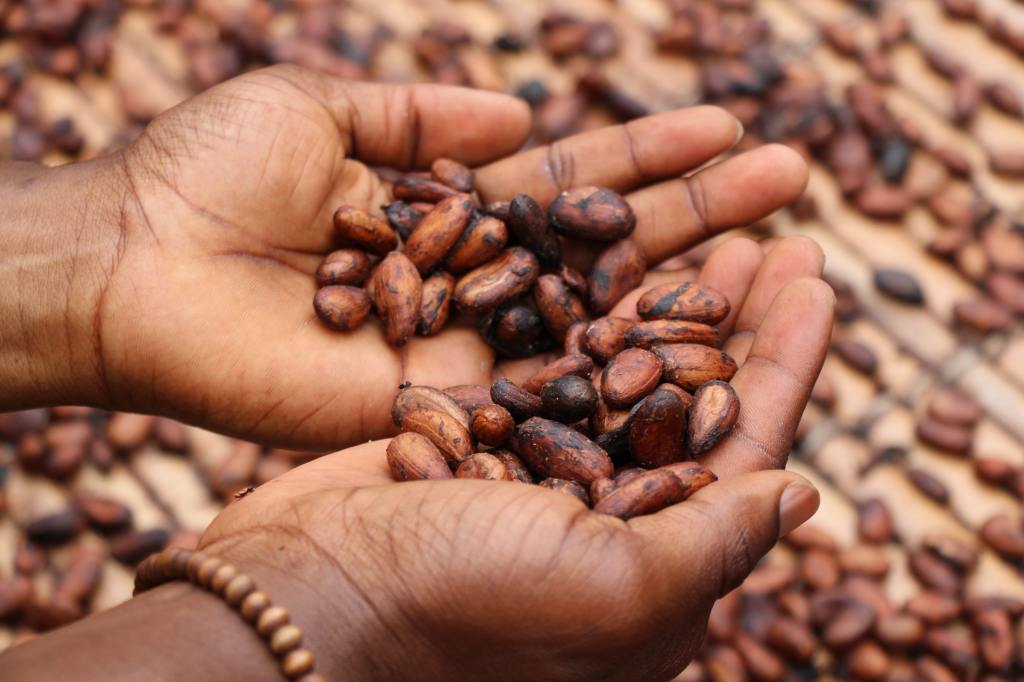
Chocolate is made from cocoa beans, and it is in the growing and harvesting of these beans that child labor is taking place. Nearly 70% of cocoa beans come from West Africa including Ghana, Ivory Coast, Nigeria, and Cameroon. Many children in these countries are born into cocoa farming families. As a result, starting from a young age, they are thrown into the vicious cycle of sacrificing their childhood and education to produce the chocolate that is exported to other countries, including the US. Those who aren’t born into cocoa families are not spared; some children become victims of child trafficking as they are kidnapped and taken to cocoa farms.

The chocolate industry is one the largest industries in the world, expected to reach $139.94 billion by 2024. With increases in cocoa production out of West Africa, the use of child labor grows with it.

WHY IS THIS IMPORTANT?

International Conventions, ratified by most countries, prohibits child labor and ensures the rights of children. The Convention on the Rights of the Child says that all countries must ensure that children are protected, given access to education and healthcare, given room to grow, and are informed and participate in achieving their own rights. International Labor Organization’s Convention 182, bans the worst forms of child labor. Child labor prevents children from gaining the education that they deserve as they spend more time working than being in school. Forcing children to perform labor instead of gaining knowledge is innately cruel and sacrifices their future.

In addition to not gaining an education, children on cocoa farms are forced to be in perilous situations. For example, many children “use chainsaws to clear the forests….[and others] climb the cocoa trees to cut bean pods using a machete.” Additionally, after using those tools, they are even forced to carry the cumbersome sacks of bean pods, weighing nearly 100 pounds, on their backs across the forests, risking permanent damage. Along with physical injuries, children involved in cocoa production are susceptible to pesticide poisoning. Supposedly, children learn how to “mix, load, and apply pesticides as young as age 12.” Constant exposure to these perilous pesticides can lead to respiratory paralysis and even death. Protective clothing is required when people come in contact with pesticides, however, children are almost never taught or given personal protective equipment to prevent harm.

It is evident that children working in cocoa production are subject to physical harm, if not death, but they are also more prone to mental illnesses. Children who began to work at the ages of 10-14 showed a higher risk of developing depression as compared to the children who started working at the ages of 15-17. This shows that the younger a child starts working, the greater their risk of developing mental health conditions in adulthood.

WHAT CAN WE DO?

One way to help eradicate child labor in cocoa production is to pressure our governments to intervene to protect children from working on cocoa farms. In the US, Section 307 of the Tariff Act of 1930 prohibits the importation of goods into the country produced using forced or indentured labor, including forced child labor. After allegations of possible child labor on the Ivory Coast cocoa farms in 2019, the US government is working with cocoa producing countries and companies to determine their course of action in addressing child labor in our chocolate.

Apart from working with governmental authorities, we have the power to directly pressurize the chocolate companies. Take action with Green America and call on the world’s ten biggest chocolate companies to put an end to child labor in cocoa and deforestation! When doing your own shopping, check your products against Green Americas chocolate scorecard or Slave Free Chocolates list.  When we come together, our voices are amplified and we reach one step closer to protect every child from the dangers of working on cocoa farms.

For more information, read Assessing Progress in Reducing Child Labor in Cocoa Growing Areas of Côte d’Ivoire and Ghana by NORC at the University of Chicago.

Esha Kode is an 18 year old premed student at The College of New Jersey, studying psychology and hopes to become a pediatric surgeon. She is a pageant title-holder, TEDx organizer, and the cofounder of a 501(c)3 nonprofit organization. Esha is a 100 Million activist and she is excited to work with a team whose primary goal is to eradicate child poverty!