my grandma turned 78 today. here’s what I learned from her.

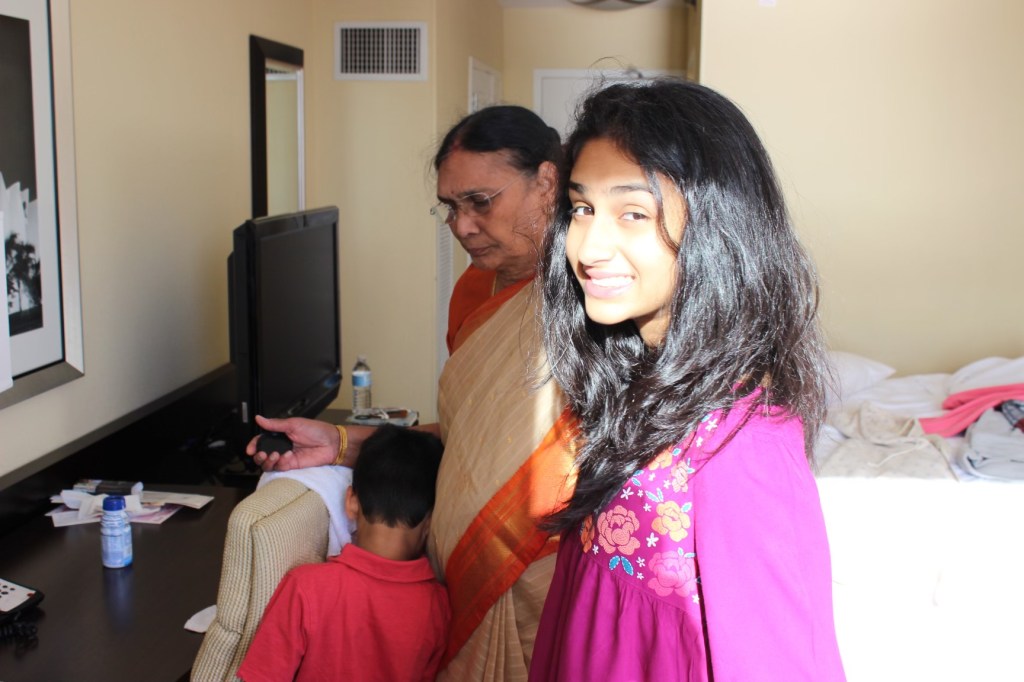
This was taken nearly a decade ago. Clearly, the Kode siblings were not fans of the camera back in the day, but hey, at least you can see my very youthful looking granny in the back.

I was raised largely by my paternal grandmother (aka Nani), a woman whose presence defined my childhood in many ways. With both my parents working demanding IT jobs, leaving early in the morning and coming home just in time for dinner, it was my grandmother who got me all dolled up for school, made kickass chicken curry regularly, and played with me after school. All the adults in my life surely played their part in my upbringing, but it was my grandma who became my caregiver when my parents weren’t there.

Like with my parents, my relationship with Nani wasn’t always easy. As a kid, you tend to see your caregivers as superheroes, incredibly perfect. I held my grandmother to those same impossibly perfect standards. But as you grow and develop an identity that is independent from theirs, you realize they’re just people too, with their own flaws.

Everyone has a story, and those stories shape who we become. It can be difficult to hold space for someone’s story, especially when their actions haven’t always been kind. But after letting go of the anger I once held toward my grandmother, I can now, a decade later, carry her story with me. I see how her actions were deeply influenced by decades of adversity. Here’s what I’ve come to understand about her, and what her 78 years of life have taught me:

  1. My grandma was a single mother raising my father back in India during a time when divorce and single motherhood were heavily stigmatized. I’m sure my grandma (more than my grandpa) faced a lot of backlash, criticism, and unsolicited advice from those around her, yet she stood her ground and made a life for herself and her son. While she may not have been perfect, her resilience is something I deeply admire.
  2. Nani, a now 78 year old woman, was born 27 years before Roe v. Wade , and yet, she always firmly believed in a woman’s right to choose. 📢 I’ve met countless women her age, or even younger, who so vehemently deny a woman a right to live the way she wants to live in her own body. And then there’s my grandma, someone who was raised in a traditional Indian household. She was ahead of her time.
  3. Speaking of being ahead of her time, my grandma is also a fashionista who is always somehow up-to-date with the ever-changing fashion trends. I was the kid who would wear the same sweats and pair of UGG boots to school every day. Seeing my lack of fashion, Nani would say “Why don’t you wear those ripped jeans? Everyone’s wearing them now” or she’d advise that I part my hair to the side because “middle parts are out of fashion now.” Her love for style was, at the time, annoying. But now, looking back, it’s rather comical and cute.
  4. She’s also one of the bravest/strongest people I know—physically and mentally. Not only did she survive a tumultuous marriage and subsequent divorce, but she survived financial problems, the death of her parents, and even her rocky relationships with her siblings. She was also just insanely physically strong. She’d pop open pickle jars none of us could manage, and when there was a snake on our porch, she handled it with just a broom and battled it out – singlehandedly. I mean, ten-year-old Esha was mesmerized. I used to love falling asleep next to her, with her arm around my tummy, knowing that I’d be safe with her.
  5. I love Nani’s love for learning. She’s a tenth grade graduate from India. She’s always doing some crossword puzzle or word search book. Her English isn’t fluent, yet she bravely practices it with everyone from the lawn mower guy to the doctors to government officials, always willing to put herself out there. She’s even picked up new ways to do hair and skincare routines, finding joy in learning something new regularly.
  6. Childhood trauma is real folks. Its impacts are lifelong and my grandma is a testament to that. As Dr. Gabor Maté always says, our physical health is deeply linked with our mental health, and those who endure some sort of childhood trauma eventually become the adults with the autoimmune diseases, cancers, and other physical ailments because these conditions are the body’s way of responding to that trauma. Dr. Maté’s insights on how trauma manifests physically resonate deeply with me when I see her.

In many ways, my chaotic relationship with my grandmother has taught me one of life’s most important lessons: that love doesn’t require perfection. She’s shown me how to (and sometimes how not to) face challenges, to always keep learning, and to embrace life with courage. She’s given me so much to carry forward, and for that, I am forever grateful. Happy 78th birthday, Nani ❤️ Let’s chow down some wings tonight.
India Showed Me How Toxic American Independence Is

As an Indian American, I used to once love the American lifestyle that vehemently promotes independence, hard work, and an equal starting ground for all: all elements of the so-called American Dream. As I got older and became more aware of the world around me, I realized that the U.S. is not as amazing as I’ve been conditioned to believe. Just like any other country, the U.S. also has its own flaws – flaws that have been constantly nagging at me since I’ve returned from my month long trip to India recently.

I have grown to love the sense of community and belonging in India. Unlike the U.S., India imbibes more of a collectivist culture. Majority of an Indian’s priority revolves around their families. For example, in the U.S., we’re taught and made to believe that we need to leave our home and be independent by the time we’re 17. In India, on other hand, it’s common to live with your family for the majority, if not all, of your life. Thus, interdependence rather than independence is emphasized in India.

As a result of this interdependent lifestyle, India creates a warm, fuzzy feeling in my heart every time because it feels like the entire nation is kinda rooting for me. It’s no longer the idea of ‘you’re on your own and only your hard work can get you to the top of the tier.’ It’s more-so an idea of ‘we are all here to support you.” Note: I recognize that this may be the experience of someone who is extremely privileged in India; the same experience may not be true for others.

An excerpt from “What Italy Taught Me About America’s Toxic Independence Culture” perfectly encapsulates my thoughts:

“The first time I stayed with my boyfriend’s Italian family, I discovered privacy isn’t an Italian priority. His mother snatched our dirty clothes from our bedroom to wash, iron, and fold the first night. The following day, I found my underwear arranged neatly in squares waiting on the bed.

I swear I appreciated it, but I didn’t expect it. I quickly learned the words “mine” and “yours” don’t exist in an Italian family. Everything is “ours.”

As another example, my boyfriend’s extended family — aunts, uncles, cousins, family friends — are also given unlimited access to his time and services. My boyfriend’s cousin needs him to drive 4 hours to pick him up — done! His aunt has a friend who wants him to book her train tickets — No problem!

In an Italian family, boundaries don’t exist, even when it comes to finances. I can’t imagine my boyfriend declaring to a family member or close friend, “you’re asking too much.” or, “I’m sorry, I’m not available.”

At the risk of sounding evil, I have to admit my boyfriend’s can-do attitude initially infuriated me. I grew up in a family that didn’t ask for special favors since, in America, to be a “real adult,” you must take care of yourself alone.”

During my prior visits to India, I hated this idea of having someone do everything for me. Need my clothes washed – give it to the maid. Finished eating and want to wash the dishes – don’t, the maid got it covered. Need to go to the store to pick something up – don’t worry, the driver will go scoop it for you. Need to get a wax, but are too lazy to leave your house – all good, the salon employee will come straight to your home. I’m so used to washing & folding my own clothes, washing my own dishes, cleaning my own house, driving my own car, and literally sometimes even waxing my own legs; so experiencing all of these ‘luxuries’ or amenities was initially frustrating and uncomfortable. It made me feel like I wasn’t in control because America taught me that I must be in control of my own life and I must do everything on my own in order to succeed.

Now that I’m back in the U.S. after a month of immersing myself in the Indian way of life, I feel a disconnect. In fact, I feel a sense of deep loneliness that I believe stems from America’s promotion of toxic independence. I realized that this isn’t just me.

Even before the pandemic, more than 3 in 5 Americans have reported feeling lonely and the percentages have only increased since the pandemic. The remedy or cure that is often offered for such feelings is meditation, exercise, reducing social media usage, get out in nature, etc.

Why is no one understanding that maybe the real cure is to shift from independence to interdependence? Maybe we won’t feel so lonely and disconnected if, as a culture, we promote the idea that living with your parents for the rest of your life is okay; not being financially independent from the age of 16 is okay; taking a break from your job and not always running around to ‘work hard’ is okay. We do not have to do it all on our own.

India taught me that living in harmony with others and using the help & love from others is where the true beauty to life exists.

“If you’re successful in achieving independence, you may fulfill the American ideal. Regrettably, in the process, you’ll extinguish the beauty of life: to live in communion and collaboration with others. Moving to Italy taught me that navigating the world on your own isn’t an accomplishment. It’s a tragedy.” – Isabella Martin

India Reflections

“Home is not a place…it’s a feeling.”

Currently writing from my basement as I reflect on the rollercoaster of memories and feelings I’ve developed during the course of my one month trip to India. 

Saying ta-ta to India is always a very bittersweet feeling, but this time it was much harder. I realized that this was the first time I actually found a home in India. All the other times I’ve visited, I followed my parents around and didn’t have the space to go explore. This time, I made it abundantly clear that this India trip is for me and I am going to squeeze life out of every day. And that’s exactly what I did. 

I’ve always hated Hyderabad every time we’ve visited in the past. I hated just sitting in my grandparents’ apartment and doing nothing but watching Telugu movies and serials all day. 

However, once I met my two good friends from Hyderabad, they introduced me to a whole new side of the city. They showed me a side of Hyderabad where true & hardcore friendships are created. Friendships seem so different here and I know other NRI humans, like coffee date #20, agree. The friendships here feel like the ‘life or death’ kinda bonds, where friends will actually move mountains to look after you. It’s a comforting feeling. They also introduced me to the lavish side of Hyderabad. The restaurants are truly exquisite. They’re filled with boujee interior and food, making it impossible to walk in with sweats and a tee. The live Telugu music is the cherry on top because it’s impossible to not bop to the music due to the band’s supreme talent. 

Though I LOVED Hyderabad, there were still some things that shook me to some extent. There’s a strong class divide in the city. There is an evident area of the city where the less privileged live compared to the more privileged. The more privileged or richer side of the city is filled with elite stores, restaurants, salons, designer places, and other luxuries that the other side has none of. Hell, even the roads are different.

It just felt like money and power were everything. With money, I was able to sit in the VIP area of the movie theater. With money, I was able to get the most elite treatment at one of the top salons in the city. With money, I was greeted differently by the employees of stores and restaurants. There was too much emphasis on financial wealth and power.

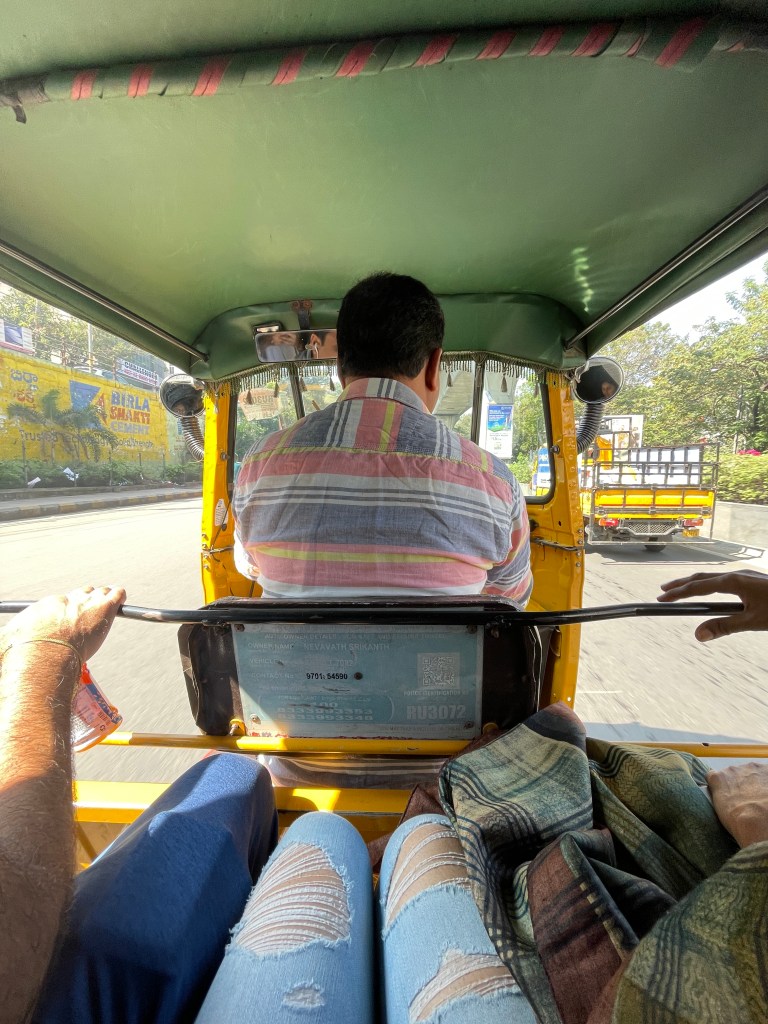
In general, India is home. It’s where my parents and grandparents were born and raised. It’s where my ancestors have thrived. It’s where the color of my skin is not a zone of judgment. It’s where my love for kurtis is not seen as a ‘cultural outfit’ – it’s just normal. It’s where the honking of the cars, bikes, and autos continuously ring in your ears. It’s where the touch of your elders gives you goosebumps as you realize that they’re actually proud of you. It’s where unbreakable friendships form. It’s a place of belonging – a place to call home. 

I am currently feeling that feeling where you have the most exquisite time during vacation or somewhere away from your normal life, where you feel the real ‘highs’ and once you come back you just feel really ‘low,’ as if you’re missing something, a piece of you. Maybe that piece of me is still in India, which is surely a sign for me to return again. 

Phir Milenge // See You Soon

This post was originally published on https://eshainbalashram.blogspot.com/.

I truly cannot believe that I’m back in my Jersey home and have completed my 15 days at Bal Ashram. I remember when I sat in the car for 2 hours, driving from the Jaipur airport to Bal Ashram, I was riddled with anxiety. Will the kids like me? How will the kids be? Will they be angry or will they ignore me? What is my purpose? Who am I and why am I even worthy of visiting the Ashram? Will the staff and faculty feel awkward about my arrival? So many questions and thoughts that were instantly hushed by the warm welcome of the staff, faculty, and most importantly, the children. 

I went to bed that first day realizing that this had been a dream of mine since my childhood days. I’ve always wanted to help children in any way I can and protect them as well as I can. It took me more than a decade to live out my dream and now I am filled with so many different emotions as I reflect on my time at the Ashram.

I want to take note of some things/moments I will forever hold in my heart:

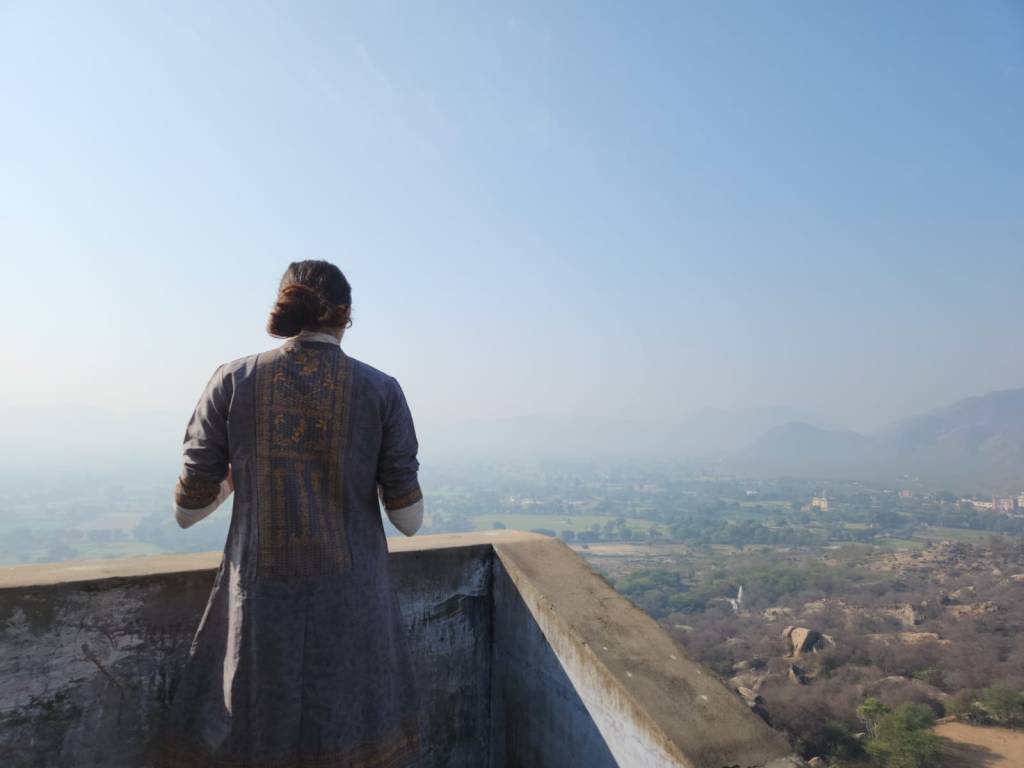
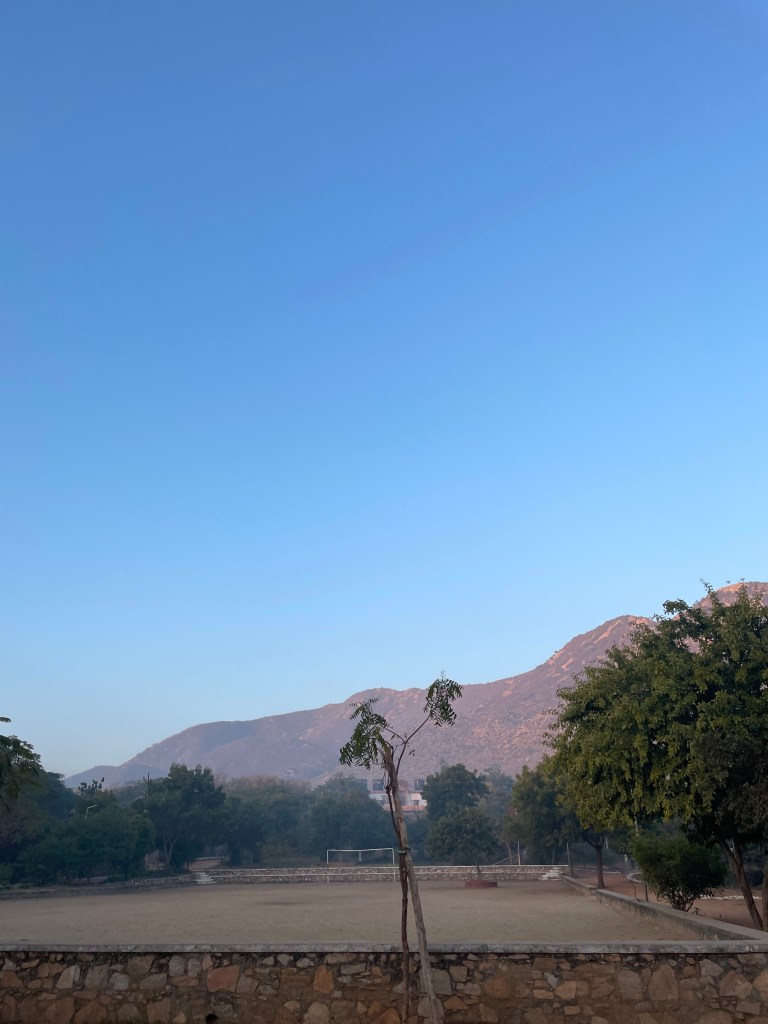
  • Sunrises & Sunsets. I now have a weird obsession with the sun. Almost every day at the Ashram I had the incredible ability to witness both the sunrise and the sunset. Breathtaking. I hope I can continue to witness the sun’s glory here at home because it has been such a huge constant at Bal Ashram that I’ve grown to cherish.
  • The ‘Esha Didi’s. I will most definitely miss hearing all of the ‘Esha Didi’s. I’ll miss the suffocatingly pure and soul-filling effects of the children huddling around me and yelling my name in my face to get my attention. 
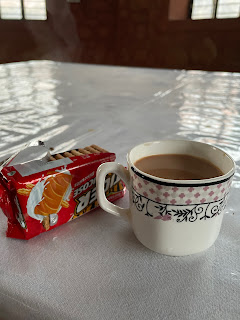
  • Chai & Biscuits. Masala chai is a fan favorite at Bal Ashram. They drink it every morning and around 4:00pm every day. I’ve grown to LOVE the taste of chai in combination with the Ashram’s Tiger Biscuits. The process of dipping the biscuit in the chai and then letting it melt in your mouth followed by a sip of the warm chai has been something I’ve grown to love. It’s also one of the most amazing ways to socialize at Bal Ashram. The staff and faculty sit on the stairs or inside the dining hall and take a few minutes to mingle with each other before they have to get back to their duties of teaching and supervision. 
  • Nature and music heal. Bal Ashram is located at a very scenic area, surrounded by mountains, occupied by plants and trees, and covered in a sand floor. All your senses are activated from the time you wake up: the chilling breeze coming down from the mountains, the clear view of the sunrises and sunsets, the feel of the cool tiles against your barefoot in the halls, the smell of the flowers growing on the trees. Bal Ashram has deepened my already existing love for nature. Music also plays a large role in the therapeutic atmosphere of Bal Ashram. Their daily prayers, slogans, chants, and meditations are so spiritually activating.
  • Never be afraid to party! These boys know how to party it up. They dance with so much passion and ‘kushi’ that you can’t help but groove with them. They taught me the dance to one of their Rajasthani songs and they even had a choreographed dance for ‘Jai Ho.’ IT WAS AMAZING! I taught them how to shake their hips (i.e. ‘thumka’) and give each other the hip hits because obviously that’s the classic Bollywood move everyone must know 🙂 
  • The Squiggle Technique. What a godly technique that left me in awe. This technique truly shows how much of our outer selves we hide/mask to fit our societal roles. It brings out our true inner feelings and subconscious thoughts that we often may try to suppress. 
  • Ladoos. While I was teaching a class on emotions one day, one of the boys started laughing hysterically. When I asked him what he was laughing at, he pointed at my cheeks and said ‘ladoo.’ I couldn’t help but crack a smile as I realized that he was referring to my chubby little cheeks that make an appearance every time I laugh wholeheartedly. I have now grown to love my cheeks thanks to that boy 🙂
  • Education is not a privilege – it’s a right. As of right now, education is a privilege for many of us when it really should be a right for ALL of us. One of the boys came up to me one day and said ‘You’re rich people and we’re poor people.’ I tried to explain to him that that is not true and money and living in the U.S. does not mean you’re better or ‘richer’ than anyone else in the world. However, he defined ‘richness’ as ‘being able to do and study whatever you want’ and that rocked me to my core. It’s true – I have the privilege to decide what education I want to receive and what future profession I want to enter. The boy told me that he doesn’t have that same option because he needs to study something specific that will make sure he gets a good job and enough money to then help his family come out of poverty. What an enormous burden to bear at such a young age. Going to school for me felt and looked so very different from what it looks and feels like for all of these children. 
  • Feminism in rural parts of the world. I already wrote about this previously, but I wanted to bring it up again to talk more about the gender divide. Opposite the Bal Ashram is a place called the Ballika Ashram, where teen girls come to learn sewing and beautician-related courses in an effort to get a job and become financially independent. During one of the celebrations, the Ballika Ashram girls came to the Bal Ashram to partake in the dances. I noticed that the boys and the girls would take turns dancing – they would never mix. The DJ would play some high-beat songs for the boys to dance to for 10 minutes and then he would switch to some low-beat and more elegant songs for the girls to dance to. When the girls arrived on the dance floor, the boys would move away and watch the girls, and vice versa. When I asked one of the boys why everyone isn’t dancing together (like I did with all of the boys and male staff/faculty the night before), the boy very confidently said “because when all boys and girls dance together, the boys dance with so much power that they might hit the girls and hurt them by accident.” I couldn’t help but to laugh at the internalized cultural sexism that still exists to this day. 
  • The 3 Musketeers. These three boys – V, L, and K – played a pretty large role at my time at the Ashram. They were older boys, around the age of 16-18, who are best friends with each other. I’ve heard and have been told directly by them that they don’t really interact with any of the staff, faculty, or even volunteers who visit the Ashram. However, they somehow felt comfortable enough with me and became a constant during my time there. These 3 best friends even collectively drew me a painting and gave me a tie-dye bracelet that says “Friend Forever” that I plan on wearing until it breaks open. I think the reason why I became so emotionally attached to these boys was because they made me feel like me being myself was enough. They gave me the space to open up and be completely myself and they accepted that part of me with so much love. 
  • The U.S. is seen as this almighty country. I agree that there are countries, like the U.S., with more resources and privileges compared to other countries. However, that does not make the people of that country better than anyone else. A lot of the boys have this internalized idea that Americans or even foreigners are superior to Indians. I don’t blame them because this has a lot to do with the centuries of the British oppression of India that may cause many to still believe that ‘white people’ or those who live in lands largely occupied by ‘white people’ are superior to others. 
  • The food! The cook, Ganesh Ji, is so insanely talented. Literally every single meal was stupendous, amazing, and incredibly filling. His paneer and puri combination was out of this freaking world!
  • The ‘Namaste Didi’s. The norm at the Ashram is to greet everyone, including the boys, with ‘Namaste’s instead of ‘Good Morning’ or ‘Hello.’ I will truly miss those early morning ‘Namaste Didi’s, where the boys would fold their hands around their chai cups and greet me with such kind smiles and eyes as they would walk me to their daily morning meet-up spots. 

The boys taught me a lot about life – too many to count, but I’ll attempt to list the main lessons. 

  • Love & presence is enough. Throughout my time at Bal Ashram, I was continuously riddled with self-doubt and guilt. Well-accomplished and distinguished leaders & talents from across the world visit Bal Ashram and then here I am, a super normal 20-year-old college gal who came from the U.S. I didn’t even have a degree to back me up! Who was I and why was I here? I wanted to just help in any way I can and I found that the ‘help’ that the boys wanted was a sense of belonging and love, so I tried my absolute best to give each and every one of them just that. I let myself open up and created a space where the boys saw me as an equal. During all their meditations and meetings, I would sit beside them instead of on a chair alongside the teachers. During their play time, I would play with them. During their movie times, I would sit for the entirety of the 2 hours and watch the whole film with them (and allowed for some to even use me as a human pillow). I gave them the space to feel comfortable enough to open up about their worries whenever they wanted to. Thus, I later realized that they didn’t need to know (or even cared about) whether or not I had a degree or if I conquered the world in some way or the other. They just wanted a companion and someone who could help them see themselves for who they are and remind them that they are all extremely talented & worthy boys. 
  • Trauma looks different for everyone. I knew that this was a fact, but I got to actually see it at the Ashram. One boy imagines a lot of things from his past due to his traumatic background. Another kid refuses to feel anger or recall his past, suppressing all of his feelings and festering up anger. Another kid feels so extremely lonely and has told me that he feels like his younger siblings have forgotten about him because he hasn’t seen them in years. Trauma is not comparable. Everyone’s trauma is trauma and thus, therapy & the healing process must also be tailored according to the needs of each individual child.  
  • What home is for some is an unknown place for others. Many of the boys remember where their homes are, but do not recall their homes being a safe space. Others reminisce about their past moments with their siblings and parents and feel lost as to why they ended up at the Ashram. Some are excited to be heading back to their homes and seeing their families after months. Home: it’s more-so a feeling than it is a place. 
  • Keep your inner child alive. Always. The children of Bal Ashram taught me to keep my inner child alive at all costs. I haven’t been that carefree & happy in so long! Keeping my inner child alive helped me become more spontaneous, ‘forgive & forget’ more easily, and made me enjoy life and its little offerings with much more ease.  

Coming back to my house in Jersey now feels a bit disorienting. I miss the ambience of the Ashram and the love from the boys. I know for a fact that I will see them again in the near future, so this isn’t a goodbye, just a ta-ta for now. Phir milenge boys 🥺