an epiphany about loneliness

I call him Dr. L.

He doesn’t appear to be a solid in form. He’s more of a flowy, gaseous entity composed of black, gray, and tinges of white, which is often overpowered by the black and gray. He starts from the top of my stomach and makes his way to the center of my chest. He sometimes even clouds my mind. He suffocates me: a lump forms in my throat, my mind races to numerous different thoughts. He creates a drowning sensation, making it seem like doing something as simple as taking a breath is an out-worldly task.

No one or anything has ever made me feel like that.

I call him Dr. L, but he’s more commonly known as loneliness.

I was never able to label the feeling of loneliness until the pandemic hit. I sense that it was always there, but I didn’t have the awareness to actually reflect on that feeling.

I was terrified of Dr. L for nearly 3 years. Every time he creeped in, I’d panic because I wouldn’t know 1) why he came, 2) what he wanted, and 3) when he would leave.

I had my Eureka moment last week and think I found my answers.

Dr. L enters when he senses that my boundaries have been crossed – either by myself or others around me.

For example, after returning from some family outing or vacation, Dr. L would often make an appearance the very next day, if not on the plane ride back home. I would always attribute this to the ‘post-vacation blues’ that ‘everyone feels.’ Sure, some part of it could be the ‘blues,’ but the other major part of it was the fact that I was surrounded by people who didn’t make me feel like my most authentic self when I was on that vacation. Thus, Dr. L would abruptly show up to make me realize that very thing: I was not in an environment that gave me the space to be my most authentic self.

Dr. L also almost always makes an appearance when I, myself, cross my own boundaries. When I neglect taking care of myself in the way that makes me feel good (ie, moving my body, writing, spending time with my little man, etc.), he runs on over into my life and makes me feel like the world is ending. In essence, though, what he’s actually trying to tell me is to slow tf down and violently remind me that my mind and body are not aligned.

Realizing this about loneliness and reframing the way I personify this feeling has greatly helped. In fact, I sensed him creeping in yesterday night. When I paused and reflected, I found that I haven’t been sleeping well, eating enough, and have been overworking. Thus, I took the day off from college, sat at home, oiled my hair, worked as much as I could work (did not OVERwork though), watched a movie with my brother, and even read. Dr. L was nowhere to be found.

This is why I’m such a fanatic over the phrase and belief that emotions are data. Loneliness, to me, is one of those many emotions. Its purpose, in my particular life, is to pop off an alarm in my mind when it senses that I am not being true to myself. It tries to nudge me to navigate myself back to my center – my truth. It’s literal data. Life-saving data.

Listen to your emotions, your feelings, and your thoughts. ❤
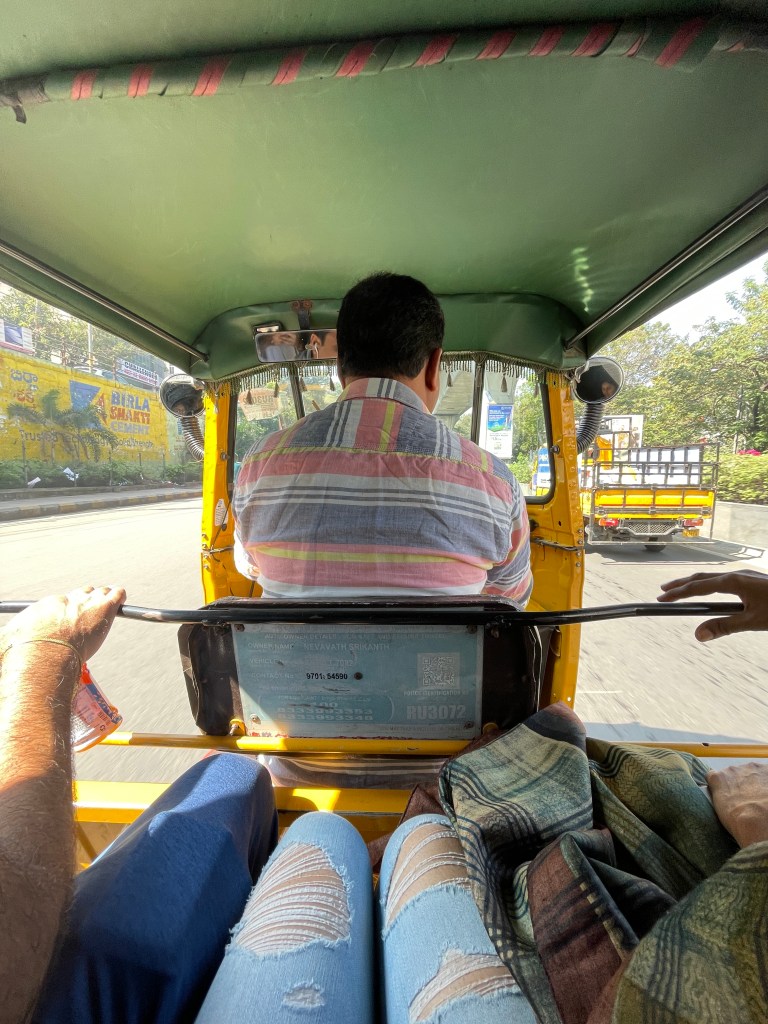
India Showed Me How Toxic American Independence Is

As an Indian American, I used to once love the American lifestyle that vehemently promotes independence, hard work, and an equal starting ground for all: all elements of the so-called American Dream. As I got older and became more aware of the world around me, I realized that the U.S. is not as amazing as I’ve been conditioned to believe. Just like any other country, the U.S. also has its own flaws – flaws that have been constantly nagging at me since I’ve returned from my month long trip to India recently.

I have grown to love the sense of community and belonging in India. Unlike the U.S., India imbibes more of a collectivist culture. Majority of an Indian’s priority revolves around their families. For example, in the U.S., we’re taught and made to believe that we need to leave our home and be independent by the time we’re 17. In India, on other hand, it’s common to live with your family for the majority, if not all, of your life. Thus, interdependence rather than independence is emphasized in India.

As a result of this interdependent lifestyle, India creates a warm, fuzzy feeling in my heart every time because it feels like the entire nation is kinda rooting for me. It’s no longer the idea of ‘you’re on your own and only your hard work can get you to the top of the tier.’ It’s more-so an idea of ‘we are all here to support you.” Note: I recognize that this may be the experience of someone who is extremely privileged in India; the same experience may not be true for others.

An excerpt from “What Italy Taught Me About America’s Toxic Independence Culture” perfectly encapsulates my thoughts:

“The first time I stayed with my boyfriend’s Italian family, I discovered privacy isn’t an Italian priority. His mother snatched our dirty clothes from our bedroom to wash, iron, and fold the first night. The following day, I found my underwear arranged neatly in squares waiting on the bed.

I swear I appreciated it, but I didn’t expect it. I quickly learned the words “mine” and “yours” don’t exist in an Italian family. Everything is “ours.”

As another example, my boyfriend’s extended family — aunts, uncles, cousins, family friends — are also given unlimited access to his time and services. My boyfriend’s cousin needs him to drive 4 hours to pick him up — done! His aunt has a friend who wants him to book her train tickets — No problem!

In an Italian family, boundaries don’t exist, even when it comes to finances. I can’t imagine my boyfriend declaring to a family member or close friend, “you’re asking too much.” or, “I’m sorry, I’m not available.”

At the risk of sounding evil, I have to admit my boyfriend’s can-do attitude initially infuriated me. I grew up in a family that didn’t ask for special favors since, in America, to be a “real adult,” you must take care of yourself alone.”

During my prior visits to India, I hated this idea of having someone do everything for me. Need my clothes washed – give it to the maid. Finished eating and want to wash the dishes – don’t, the maid got it covered. Need to go to the store to pick something up – don’t worry, the driver will go scoop it for you. Need to get a wax, but are too lazy to leave your house – all good, the salon employee will come straight to your home. I’m so used to washing & folding my own clothes, washing my own dishes, cleaning my own house, driving my own car, and literally sometimes even waxing my own legs; so experiencing all of these ‘luxuries’ or amenities was initially frustrating and uncomfortable. It made me feel like I wasn’t in control because America taught me that I must be in control of my own life and I must do everything on my own in order to succeed.

Now that I’m back in the U.S. after a month of immersing myself in the Indian way of life, I feel a disconnect. In fact, I feel a sense of deep loneliness that I believe stems from America’s promotion of toxic independence. I realized that this isn’t just me.

Even before the pandemic, more than 3 in 5 Americans have reported feeling lonely and the percentages have only increased since the pandemic. The remedy or cure that is often offered for such feelings is meditation, exercise, reducing social media usage, get out in nature, etc.

Why is no one understanding that maybe the real cure is to shift from independence to interdependence? Maybe we won’t feel so lonely and disconnected if, as a culture, we promote the idea that living with your parents for the rest of your life is okay; not being financially independent from the age of 16 is okay; taking a break from your job and not always running around to ‘work hard’ is okay. We do not have to do it all on our own.

India taught me that living in harmony with others and using the help & love from others is where the true beauty to life exists.

“If you’re successful in achieving independence, you may fulfill the American ideal. Regrettably, in the process, you’ll extinguish the beauty of life: to live in communion and collaboration with others. Moving to Italy taught me that navigating the world on your own isn’t an accomplishment. It’s a tragedy.” – Isabella Martin